
CATEGORIES
Education Bulletins UncategorisedWelcome to the Winter 2026 edition of the Cyber Resilience Learning and Skills Bulletin!
Happy New Year! As the hours of light (finally) grow and the days (gradually) lengthen, we are eagerly anticipating the return of ‘Cyber Scotland Week’ for its eighth year between 23rd and 28th February! This fantastic week brings together people and sectors across Scotland to share knowledge, strengthen resilience and celebrate innovation in cyber security. This year’s theme maintains last year’s focus on ‘Can’t Hack It?!’, highlighting how everyone in Scotland can take simple, practical steps to stay safer online. From individuals and families to small businesses and large organisations, the message is clear: improving cyber resilience does not have to be complicated, but it does require awareness and action.
Anyone can host an event for CyberScotland Week. From organisations to community groups and individuals, you’re helping to drive forward the conversation about cyber resilience.
If you have any questions, contact cyberscotland@bigpartnership.co.uk
Schools, Colleges and Universities
‘The Bongles’ – Introducing basic concepts of cyber security
‘The Bongles and the Crafty Crows’ story book introduces younger learners to basic concepts of cyber security, including the importance of passcodes and passwords.
To mark ‘Cyber Scotland Week’, Education Scotland will hold read-along events in English and Gaelic for children:
- Na Bongles agus na Starragan Carach – Leughadh Còmhla FTMG (2nd March, 10.00am).
- The Bongles – Children’s ASN Read Along – DigiLearn (3rd March, 10.00am).
Recordings are also available to view at any time:
- The Bongles and the Crafty Crows Practitioner webinar
- The Bongles and The Crafty Crows. Children’s Read Along. Cyber Scotland Week 2024
Remember there are some additions resources on Parent Club: Tips for creating strong passwords to stay secure online | Parent Club

Safer Internet Day resources
Are you supporting Safer Internet Day? Check out the Digiduck Stories | Childnet range of stories from Childnet, which offer a great introduction to internet safety concepts such as consent, respect, and reliability of information. You can read them in online flip books or as a PDF and download the A3 posters too.
And take a look at CEOP’s Jessie & Friends resource online, the key message of which is that, if children are ever worried by anything online, they should tell a trusted grown-up who will help.
‘Safer Internet Day’ sessions for staff
The following three ‘Cyber Resilience and Internet Safety’ sessions are available for staff involved in early learning centres, the primary sector, or additional support needs, and for anyone working with children and young people at the early level.
- Early & First Level Internet Safety Resources Signposting Webinar (3rd February, 3.30pm).
- Supporting Cyber Resilience & Internet Safety Learning at early level (2 parts) (23rd February, 3.30pm).
- Supporting Cyber Resilience & Internet Safety Learning at early level (2 parts) (24th February, 3.30pm).

Young Scot and Scottish Government launch Cyber Resilience Campaign for Young People
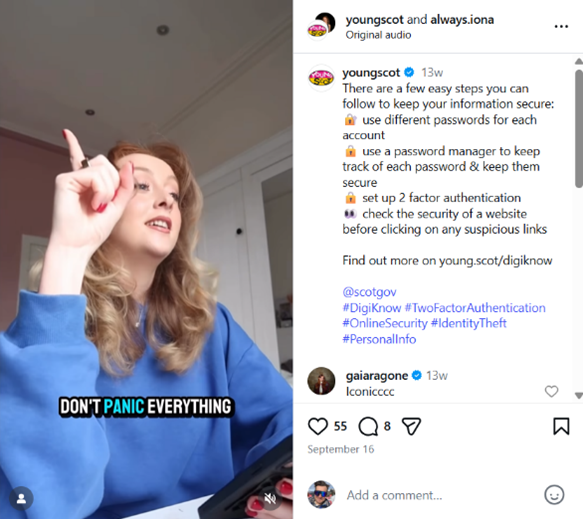
Young Scot’ has partnered with the Scottish Government’s Cyber Resilience Unit to deliver a new campaign to help young people across Scotland stay safe and secure online and protect their personal information. The initiative responds to findings from Young Scot’s ‘Truth About Youth’ survey, which revealed significant gaps in cyber safety awareness among young people.
‘Young Scot’ is commissioning three creator-led short films designed to share practical advice in an engaging and relatable way. Each film will focus on a key theme:
- ‘Who’s Really Behind Your Profile?’ – exploring identity theft and hacked accounts.
- ‘Think It Couldn’t Happen to You?’ – challenging low concern about cyber crime.
- ‘Level Up Your Cyber Game’ – promoting strong cyber hygiene practices.
The first video, ‘Who’s Really Behind Your Profile?’, produced by popular content creator Iona, has already been shared on Instagram and TikTok and the campaign will continue to roll out across Young Scot’s digital channels, including TikTok, Instagram, Snapchat, YouTube, and the Young Scot app, reaching millions of young people. Additional resources will be published on the website, alongside newsletters and geographically targeted updates.
AI Guidance and Toolkit to launch at ‘YouthLink Scotland’ Digital Youth Work Conference
A new Artificial Intelligence Toolkit for the youth work sector will be launched by the Minister for Higher and Further Education, Ben Macpherson, on Tuesday, 10th February at a Conference for youth workers and others who support young people in their online lives. The new resource is designed to help non-specialists engage young people in meaningful conversations about AI, building resilience and understanding, and digital literacy.

Business and other organisations
Cyber and Fraud Centre Scotland Training
The following training sessions are due to be held by the Cyber and Fraud Centre Scotland during February and March:
2nd March: ‘Cyber Executive Education (Aberdeen)’.
19th February: ‘Cyber Executive Education (Edinburgh)’.
25th February: ‘Introduction to Cyber Security – Cyber Scotland Week Special’.
26th February: ‘Cyber Executive Education (Glasgow)’.
Digital Learning Initiative
For the first time in Scotland, the Digital Learning Initiative brings together leading technology learning platform providers – including AWS, Cisco, IBM, Microsoft, and Salesforce – in partnership with Skills Development Scotland, to offer free online learning to adults in Scotland. Designed to improve digital skills and boost productivity in the workplace, the initiative helps employers address skills needs in their businesses through upskilling and reskilling staff in digital technologies.
The Digital Learning Initiative provides a one-stop portal for free, accessible online courses in Data Science, Artificial Intelligence (AI), Cyber Security and Data Science.
Scottish Apprenticeship Week
Scottish Apprenticeship Week will run from 2nd – 6th March and will showcase how:
- Apprenticeships are working for Scotland by creating careers and enabling people to reach their potential, supporting employers to develop and grow their workforce and getting real returns for the economy.
- Apprentice employers are working for Scotland by providing opportunities for people from diverse backgrounds – this puts investment back into the country’s economy.
- Apprenticeships are working for Scotland’s employers, providing a pipeline of talent that is being supported and trained to meet their needs.
- Apprentices are working for Scotland by adding value to the country’s businesses and developing in industries that support workforce demand.
The campaign will demonstrate how Scottish Apprenticeships are critical to growing and expanding the nation’s workforce, giving people skills to thrive. From Shetland to the Borders, from family firms to global businesses, apprenticeships are working for Scotland.
Get your hands on #ScotAppWeek26 campaign resources for your socials, posters or presentations.
E-mail: scotappweek@sds.co.uk

‘Training the Trainers Hub’
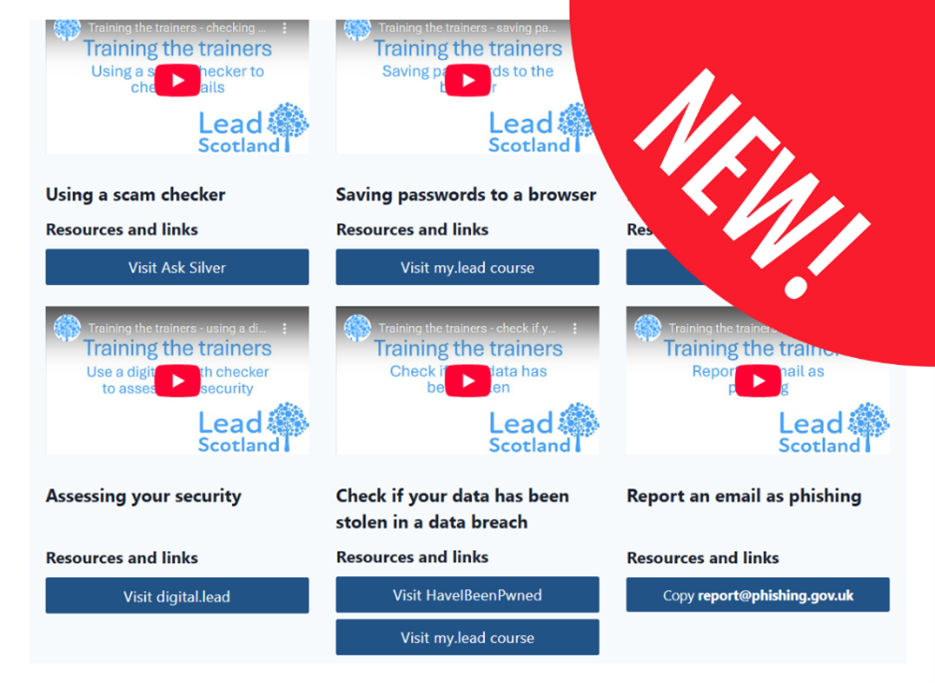
‘Lead Scotland’ has released its new resource ‘Training the Trainers Hub’ – cyber courses now available via video and online at any time.
Videos are just 5-10 minutes long, making them ideal for quick, bite-sized learning. If you support disabled people or those with limited digital confidence (professionally or in an unpaid role), these resources are designed for you, but are suitable for anyone.
The hub helps you build confidence and stay up to date with online safety, so you can support others effectively. It also includes materials to share with those you assist. These videos replicate our live webinars, which can still be booked for groups or organisations.
Interested? Contact our Cyber Project team at CyberProject@lead.org.uk.
Empowering Women to Lead Cyber Security – Scotland
Empowering Women to Lead Cyber Security is a unique, cross-sector, leadership programme for women in digital and InfoSec professions, delivered by ‘Empowering You’ and in association
with ScotlandIS, the Scottish Government, and the Scottish Digital Academy.
The aim is to build a collaborative and powerful community of female leaders in cyber security and InfoSec roles across Scotland and to enable the transition of cyber security professionals from all career stages into more confident, capable, and energised leaders. ‘Empowering You’ has been running the programme in Scotland for over three years, and the alumni network of graduates now includes nearly 300 empowered and empowering female leaders driving sustainable cultural change in the InfoSec and broader digital eco-system.
Participation is free of charge. The deadline for applications to the 2026 programme is 20th February.
Click here for more information on the programmes and details of how to apply.
You can also contact the programme organisers directly with any questions at hello@empowering-you.co.uk, using ‘EWLCS – Scotland’ as the subject heading. Good luck!


‘Lead Scotland’ webinars
‘Lead Scotland’ is hosting five online webinars as part of ‘Cyber Scotland Week’.
Whether it’s a refresher or a first time, there’s always need for some cyber tips in a world where cyber criminals are more common than ever and all our services move online. Stay ahead of the game and keep yourself safe by signing up to our webinars.
- 6 things to do for staying safe online (Monday 23rd February, 11.00am – 12.00pm)
- Staying safe from phishing (Tuesday 24th February, 11.00am – 12.00pm)
- Staying safe on social media (Wednesday 25th February, 11.00am – 12.00pm)
- Staying safe from sextortion scams (Thursday 26th February 11.00am – 12.00pm)
- Staying safe while shopping online (Friday 27th February, 11.00am – 12.00pm)
Our cyber webinars are designed for disabled people with accessibility in mind. Register now to ensure we can accommodate any accessibility requirements in time. Book your space on our website, or head to the ‘Cyber Scotland Week’ website for more events from other organisations.
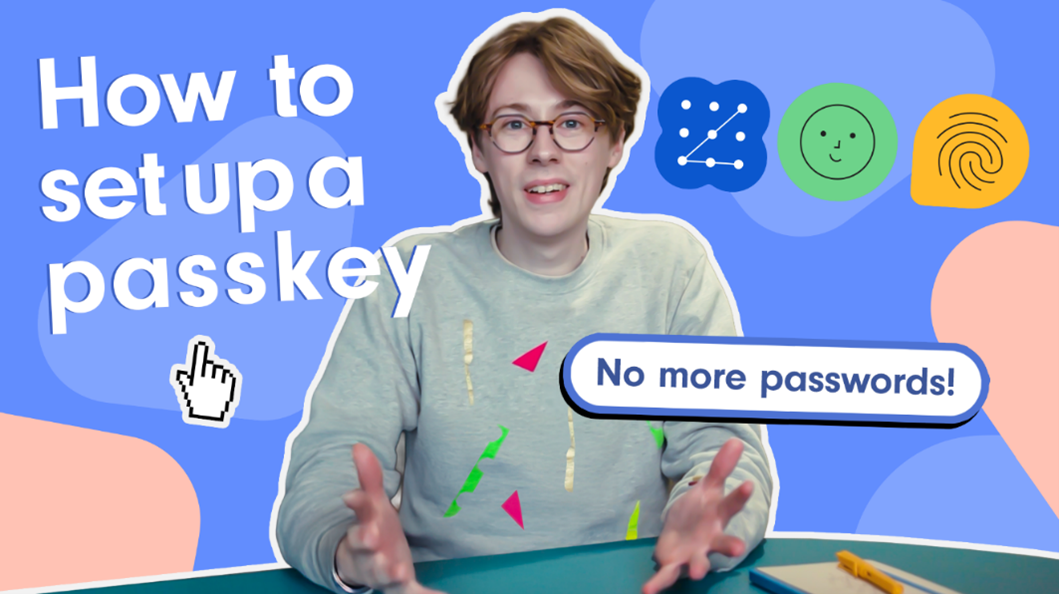
‘No More Passwords’
Tired of remembering passwords? There’s a better way – it’s called a passkey! 🔐
In this 5-minute tutorial, Daniel from Digital Skills Education will show you how to use a passkey to log into your accounts using your fingerprint, face, or a PIN.
He’ll explain:
- What passkeys are and how they work
- Why they’re safer than passwords
- How to set one up on your computer or phone
This video is part of the Safe For Work playlist, made by Scottish Union Learning and Digital Skills Education for CyberScotland.
To report an e-mail phishing attempt, forward your e-mail to the National Cyber Security Centre: report@phishing.gov.uk
If you are a victim of cyber crime, please report it to Police Scotland by calling 101.